
How to Improve Mobile Signal in Buildings
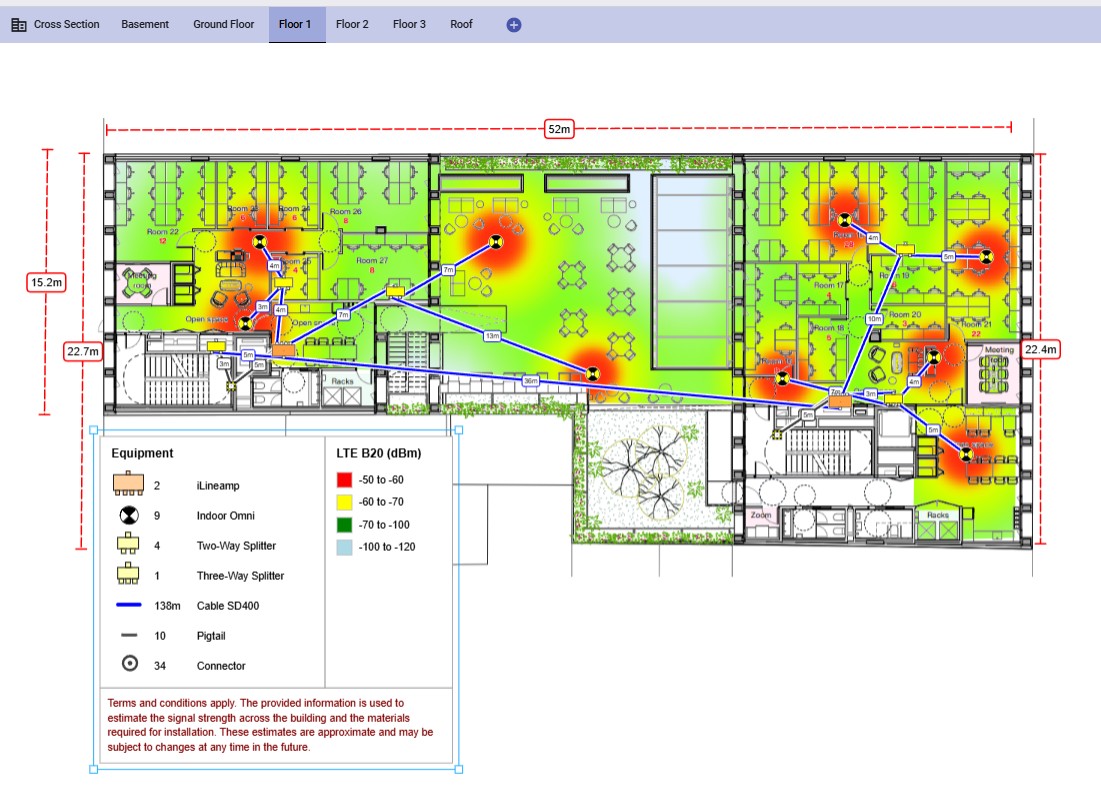
Modern buildings are designed for energy efficiency—not connectivity.
Common causes of poor signal include:
- Low-emissivity (Low-E) glass that reflects radio signals
- Metal structures and cladding that block penetration
- Thick concrete walls that absorb signal strength
- Large building layouts creating dead zones and weak coverage areas
- Distance from mobile towers or poor external signal
Even if signal exists outside, only a fraction of it reaches inside—and what does often becomes unstable.
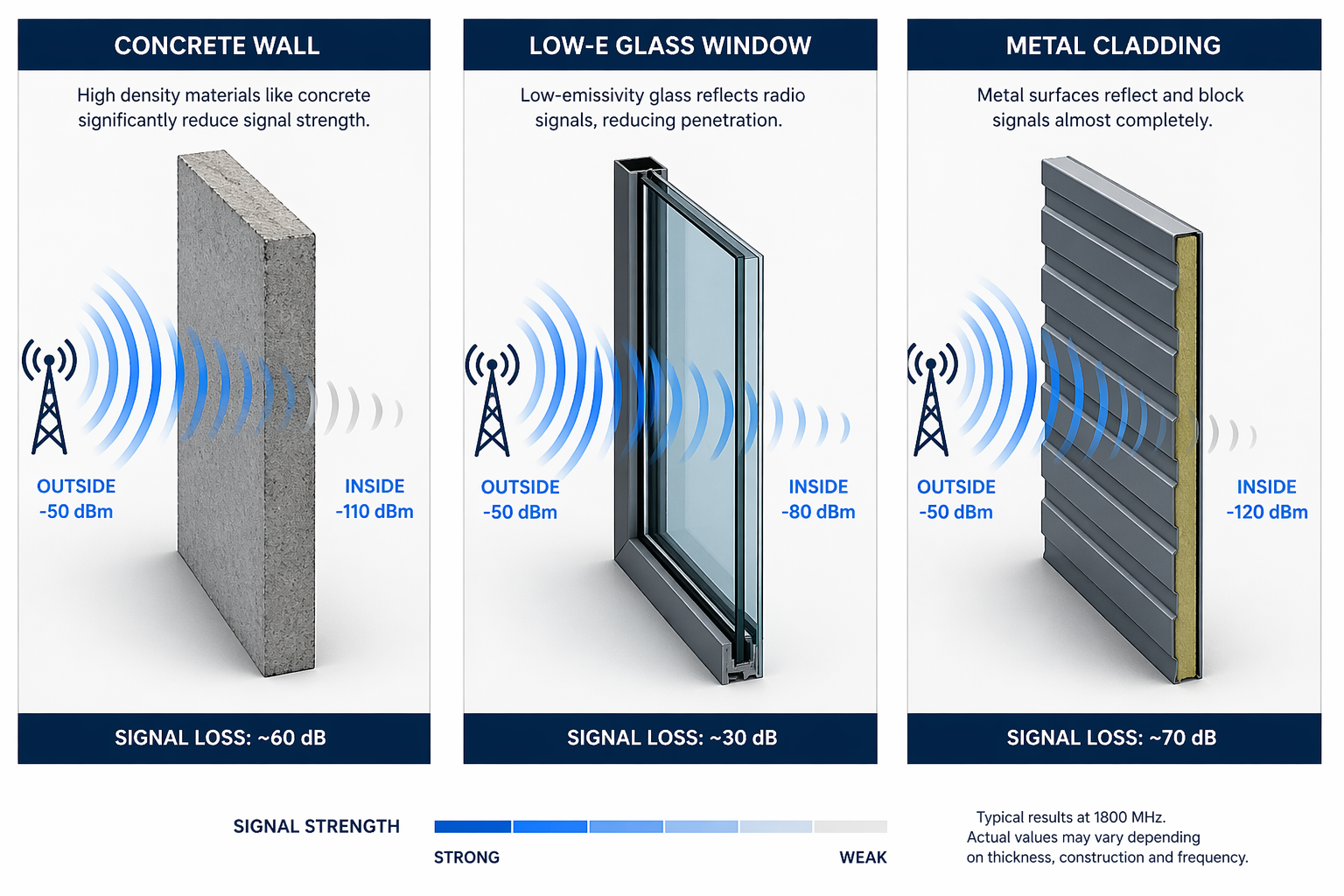
Step 1: Measure the Real Signal. Don’t Guess.
The biggest mistake people make is trying to fix signal without understanding it.
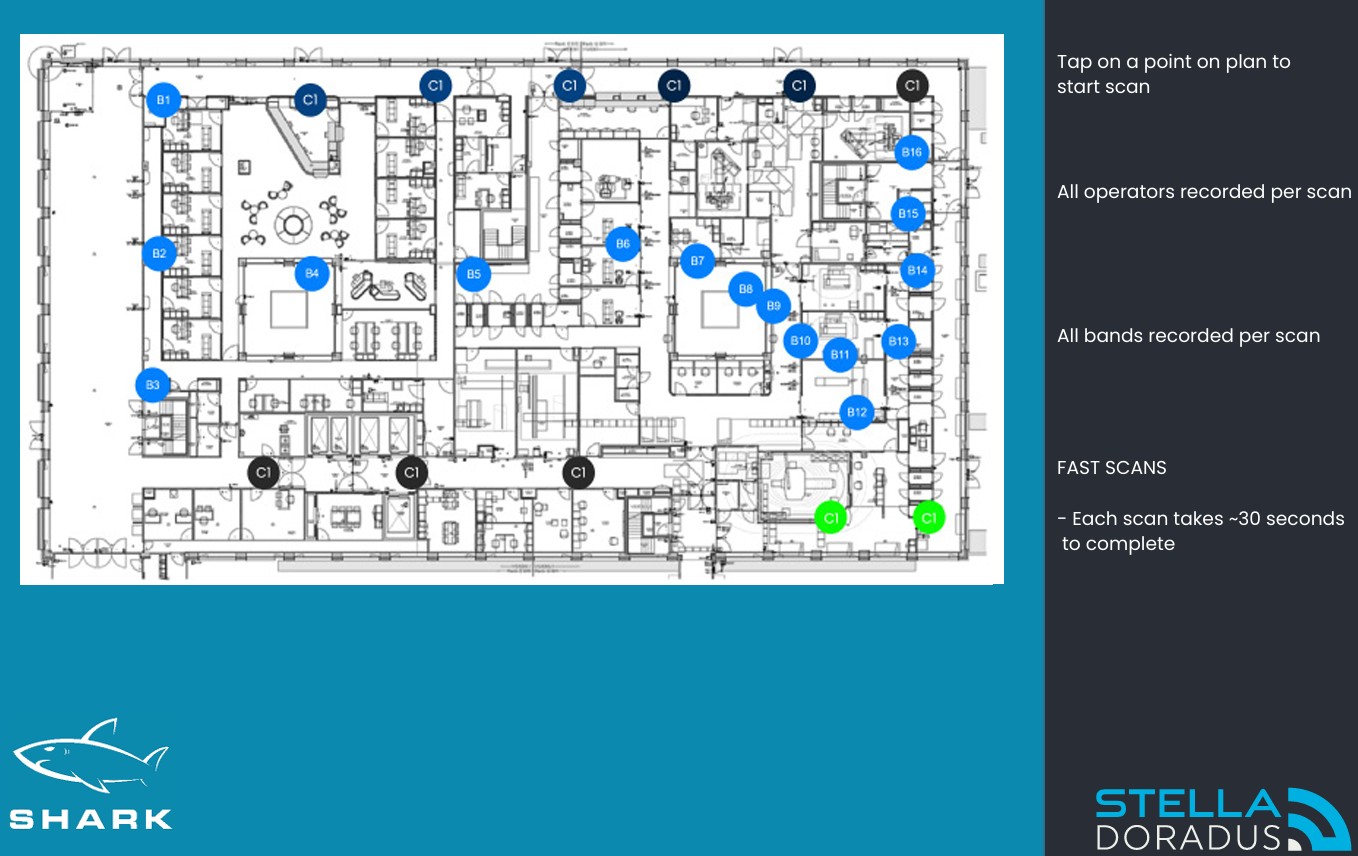
A proper cellular survey measures:
- Signal strength (RSRP)
- Signal quality (SINR)
- Interference levels
- Performance across all operators
👉 Without this data, any solution is just guesswork.
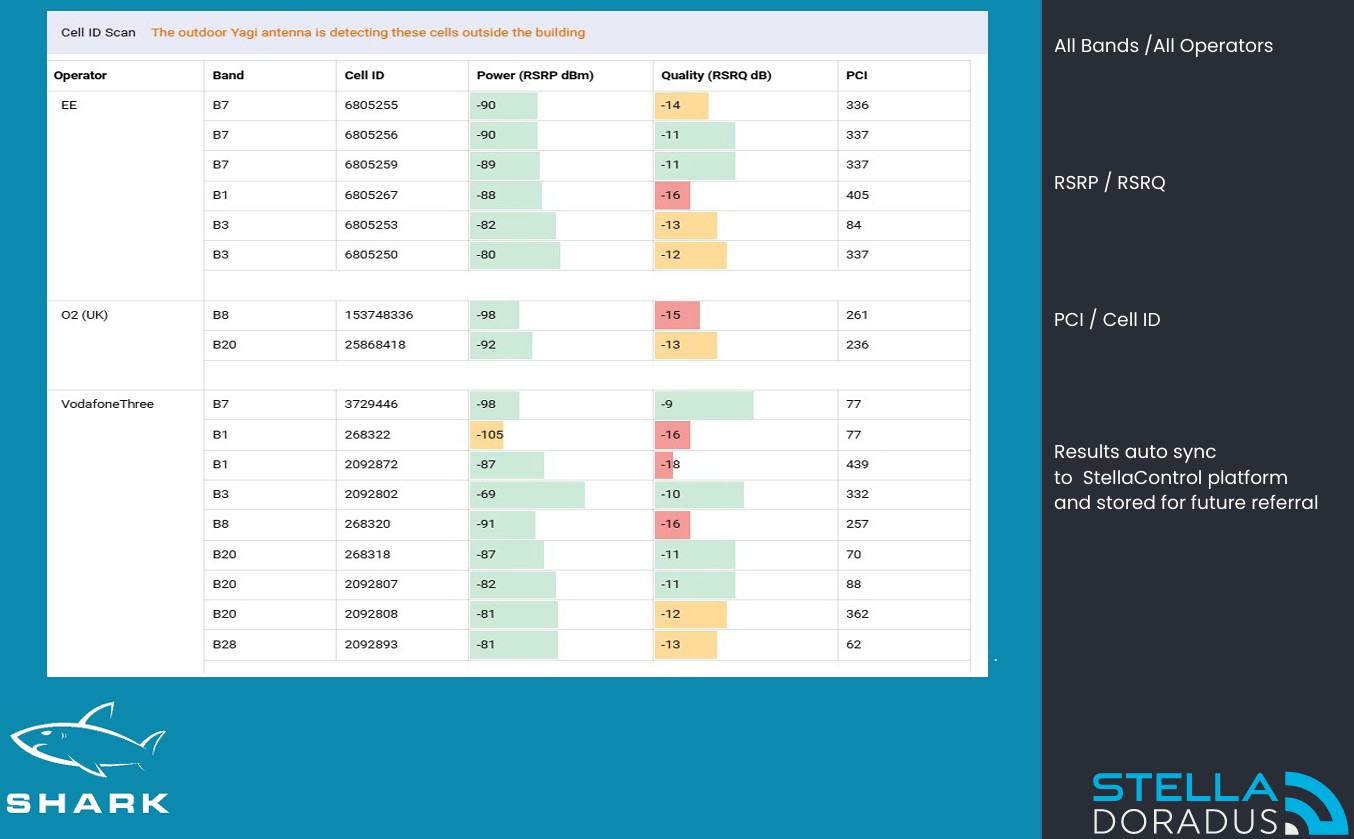
Using a professional planning tool allows you to visualise coverage across your building before making decisions.
Step 2: Improve Signal the Right Way
Once the problem is understood, there are several proven ways to improve indoor mobile signal:
1. Use a cellular repeater system
Captures signal outside the building and distributes it indoors.
Best for:
- Offices
- Warehouses
- Residential buildings
2. Install a Distributed Antenna System (DAS)
Used in large or complex buildings to distribute signal evenly.
Best for:
- Hospitals
- Airports
- Large commercial sites
3. Optimise antenna placement
Correct positioning of antennas can dramatically improve coverage.
4. Ensure all frequency bands are supported
Modern phones use multiple bands simultaneously (carrier aggregation). The operators use this function to get the fastest data speeds.
If some bands are missing, performance drops significantly. This can manifest in slower data speeds or poor call quality.
Step 4: Plan Before You Install
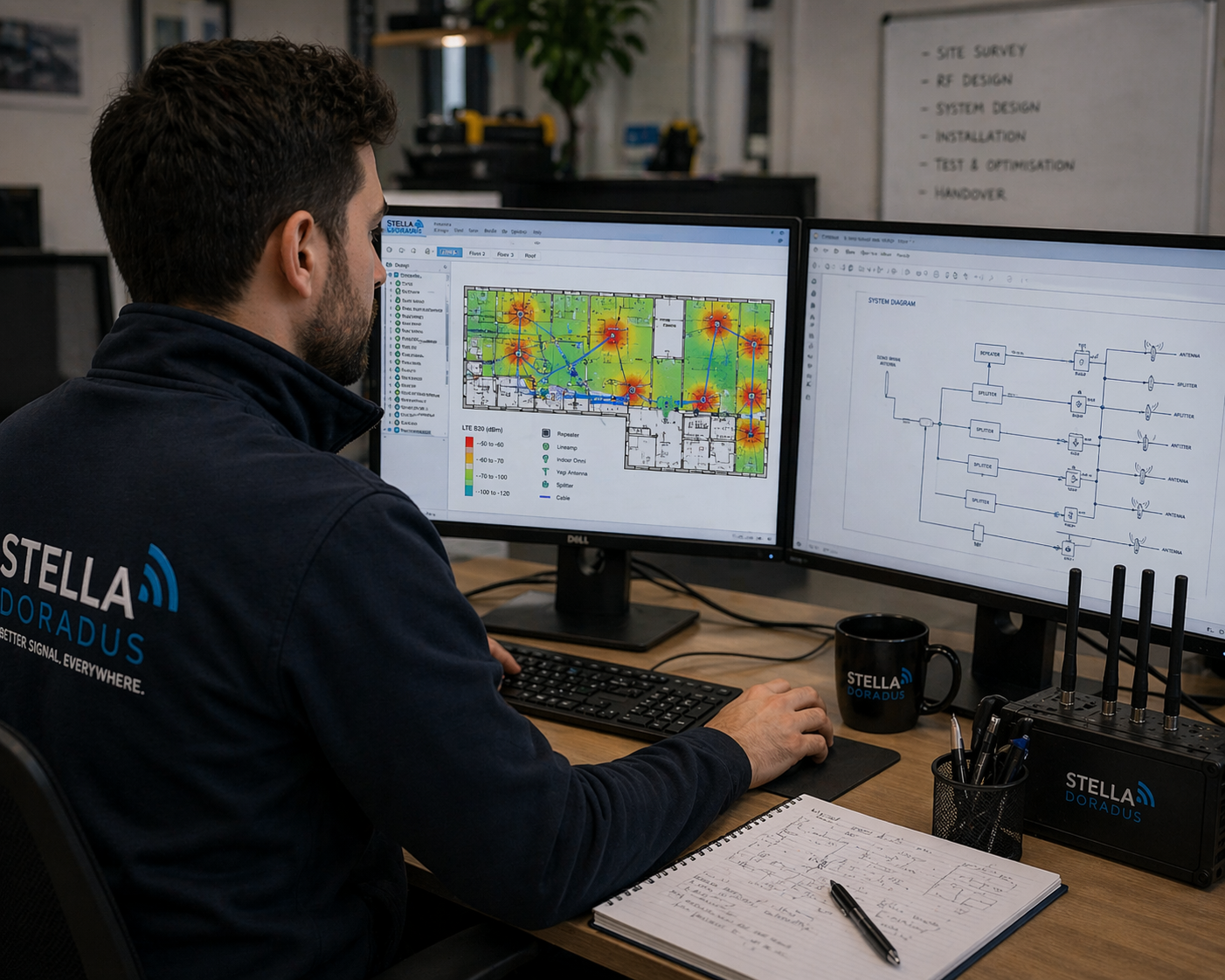
This is where most projects go wrong.
Installing equipment without planning leads to:
- Poor coverage
- Wasted budget
- Multiple reworks
Using a planning tool allows you to:
- Simulate signal coverage
- Identify dead zones in advance
- Optimise antenna locations
- Design for all operators and bands
👉 This ensures the system works correctly the first time.
Why Professional Planning Makes the Difference
Most signal issues are not caused by lack of equipment—but by poor design.
With the right tools and expertise, you can:
- Avoid trial-and-error installations
- Reduce costs
- Deliver consistent, high-quality coverage
- Future-proof your building for 5G and beyond
Start Planning Your Coverage
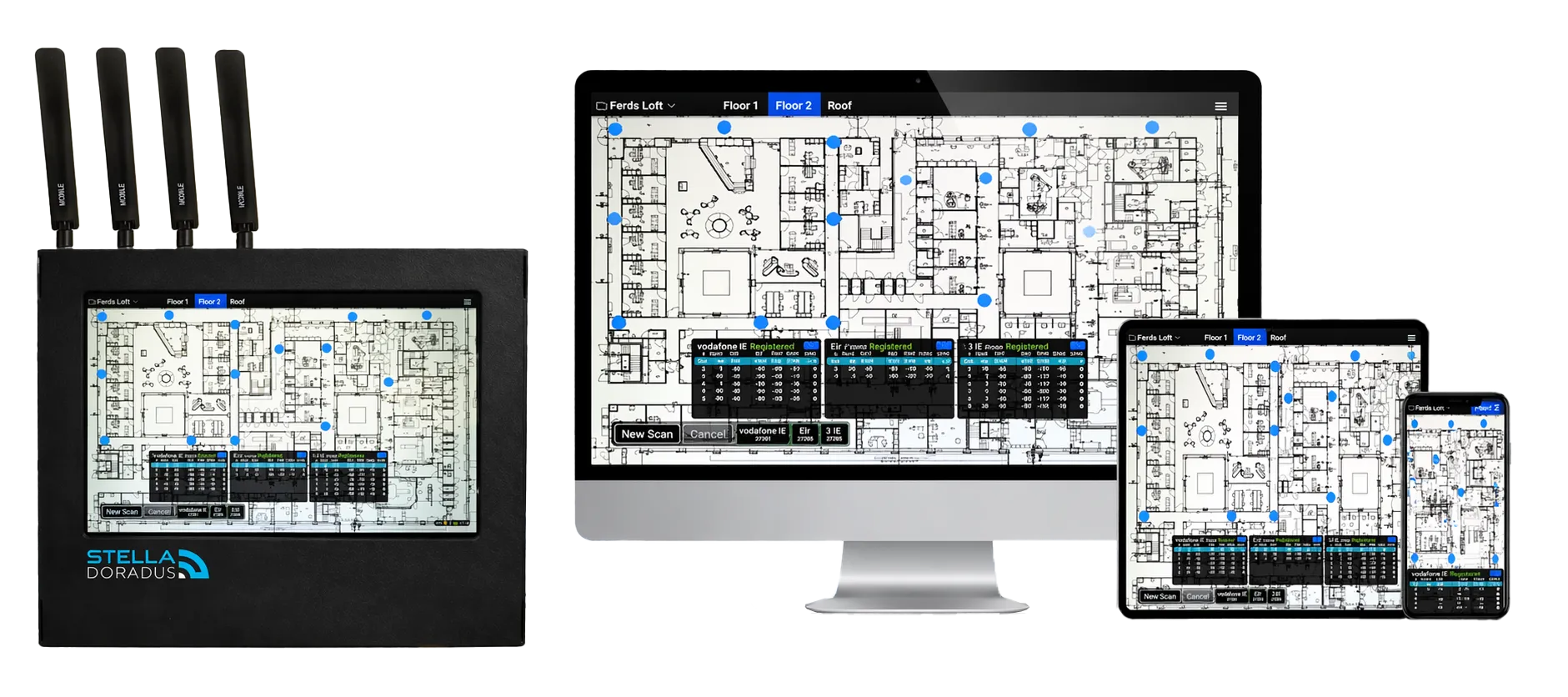
Improving mobile signal starts with understanding it.
Our free 4G/5G planning tool allows you to design and visualise indoor coverage for any building—quickly and accurately.